

DEGO's acoustic ceilings Acoustic Cloud panels can be installed on all types of surfaces, in various forms with no area limitations, not needing expansion joints since our product is extremely absorbent and elastic. Color is not a problem! Let your imagination take control. Note that the ceiling cannot be painted with a normal wall ink. MUTE has MUTEink+, a special micro-particle ink suitable for this purpose.
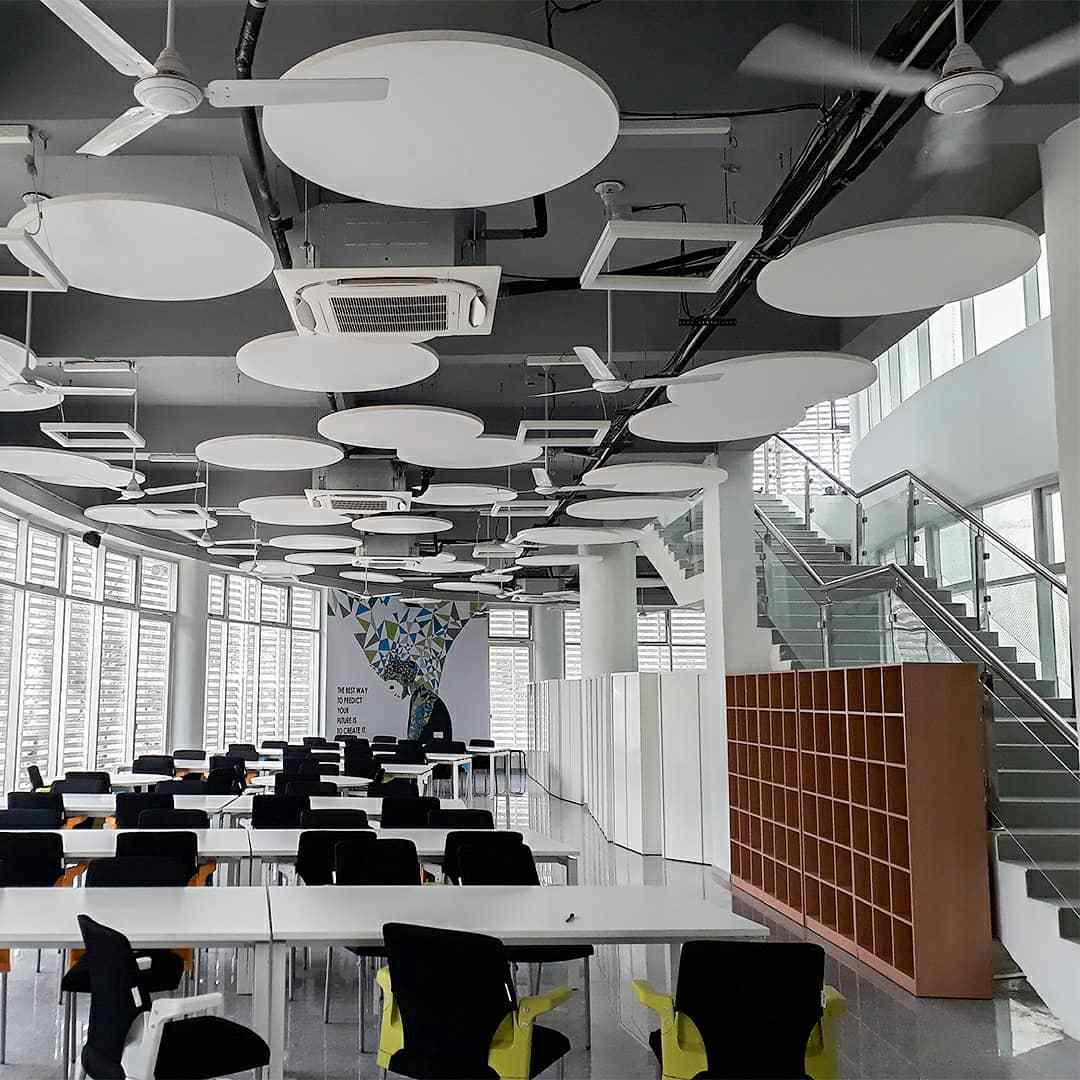
Fiberglass acoustic ceiling Acoustic ceiling Panels is a kind of sound-absorbing material with glass fibre as the main substrate, which is widely used in modern architectural design for places that need a good acoustic environment, such as meeting rooms, concert halls, libraries, and so on.Below are some key features and application scenarios about glass fibre acoustic ceiling:
Material Properties
- Acoustic performance: The fibre structure of glass fibre acoustic ceiling can effectively absorb and reduce the noise in the space, reduce the echo time and improve the indoor acoustic environment.
- Fire resistance: As an inorganic material, glass fibre has good fire resistance, and the glass fibre acoustic ceiling can meet the requirements of Class A non-combustible material.
- Durability and moisture resistance: glass fibre acoustic ceiling has excellent durability and moisture resistance, not easy to be affected by moisture and deformation, even in the environment of high humidity can maintain stable sound absorption effect and service life.
- Lightweight and easy to install: Compared with traditional sound-absorbing materials, glass fibre acoustic ceilings are light in weight, easy to carry and install, usually installed with a metal open keel, which is convenient and quick to construct.
- Aesthetically pleasing and customizable: the surface can be decorated with a variety of treatments, providing a wealth of colours and textures to meet the needs of different interior decoration styles.
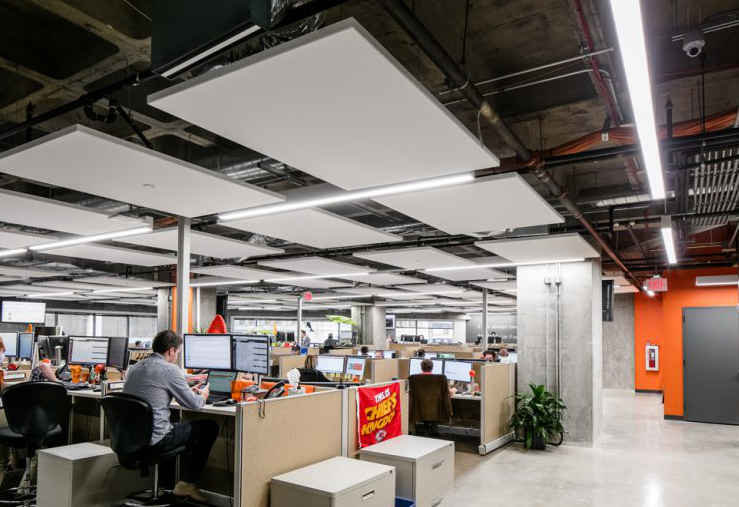
Application Scenarios
Cloud Shaped Ceilings is widely used in the following places:
- Conference rooms: Provide a clear voice transmission environment to ensure efficient business communication.
- Concert halls: Absorb audio reflections, provide high-quality acoustics, and enhance the music listening experience.
- Libraries: Reduce noise transmission and interference, creating a quiet study and research environment for readers.
- Stadiums: Improve the acoustics of large spaces to ensure that spectators can clearly hear match commentators and athletes.
Office buildings, hotels, hospitals, etc.: Improve the overall acoustic quality and create a more comfortable and pleasant indoor environment.
